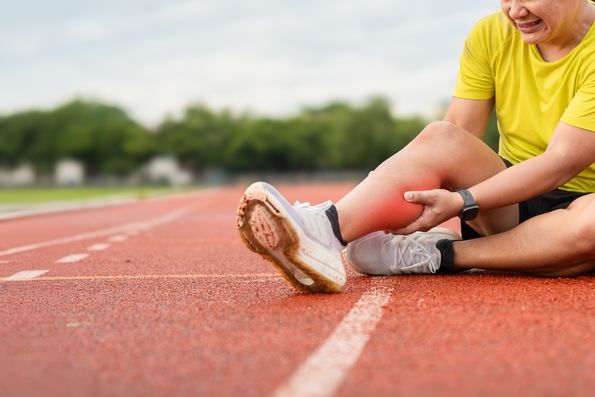
Sports keep the body fit and the mind active. But every athlete runs a certain risk. One misstep may end your sports season altogether. If you know what dangers to expect, then you will be prepared to avoid them.
This blog will help you learn tricks for sports injury prevention.
Understanding How Sports Injuries Happen
Sports injuries fall into two broad groups. The first group is acute injuries. These happen suddenly during a tackle, fall, or twist.
The second group is overuse injuries. These build slowly over weeks. The tissue never gets enough time to repair itself. As a result, pain appears long after the damage begins.
Overuse injuries are more common than most players expect. However, they are also the easiest to prevent.
Common Types of Sports Injuries
Different sports stress different body parts. Still, some injuries appear again and again.
- Sprains. This is a ligament injury that may have started from stretching. Ankle sprains are most common.
- Strains. Injuries to muscles or tendons caused by tearing. Most common in hamstring strains.
- ACL Tears. This means your anterior cruciate ligament in your knees may have been damaged. Usually happens while pivoting.
- Meniscus tears. The knee cartilage tears when the knee twists under load.
- Rotator cuff injuries. Shoulder tendons wear out in cricket, swimming, and tennis.
- Tennis and golfer’s elbow. Tendons near the elbow become inflamed from repetition.
- Shin splints. Pain along the shin bone from running on hard surfaces.
- Stress fractures. Tiny cracks in bone caused by repeated impact.
- Fractures and dislocations. Usually from direct contact or hard falls.
Each injury has a different healing timeline. Knowing the types of injury in detail helps you to build plans for sports injury prevention. Therefore, self-diagnosis often leads to wrong treatment.
Warning Signs You Should Take Seriously
Some soreness after training is normal. Certain signs are not.
Sharp pain during a specific movement needs attention. So does swelling that appears within a few hours. A joint that feels loose or gives way is a red flag. Pain that wakes you at night matters too. The same applies to pain that worsens each week. Numbness or tingling suggests nerve involvement.
Thus, pushing through these signals almost always makes recovery longer.
Sports Injury Prevention: What Actually Works
Good sports injury prevention is built into your routine. It is not something you do only before a match. Start with a proper warm-up. Spend ten minutes raising your heart rate. Then move through dynamic stretches that mimic your sport. Static stretching alone does not prepare muscles for effort.
Strength training matters more than most athletes realize. Strong hips protect the knees. A strong core protects the lower back. Two sessions each week are usually enough. Balance and agility work also help. Single-leg drills train the small stabilizing muscles. Consequently, your joints react faster to awkward landings. Increase training load slowly. A jump of more than ten percent per week invites trouble. Sudden increases cause most overuse injuries. Rest is a component of training and not a vacation from training. Muscle repair occurs during rest days, and sleeping for 7 to 8 hours aids in muscle repair.
Lastly, take care of your equipment. Get new shoes when your old ones wear out. Wear proper safety equipment for your sports. Stay hydrated during Indian summers.
Why Technique Should Be Given More Focus
Improper movement creates wear and tear in your body. The inward bend in your knees puts constant strain on your ACL. The rounded posture while lifting weights places excessive load on your spine.
The guidance of a coach is essential to fix your bad habits. Video analysis frequently shows errors that you aren’t aware of. Thus, one coaching session is worth several months of therapy. Teenage athletes should be treated differently since their bones are not fully developed yet. Year-round participation in one sport greatly increases their risk of injuries.
First Aid for the First Two Days
The immediate treatment will determine the healing process. Take easy but effective actions.
Take yourself out of the activity right away. Shield the injured area from any additional strain. Place ice packs on it for 15 minutes several times per day. Perform compression using an elastic bandage. Keep the leg elevated above heart level.
Do not use heat, massage, or medications that cover up the symptoms during the first two days, since they can worsen the condition. Consult a doctor if it is impossible for you to stand on your leg. This is an important step for sports injury prevention that reduces chances of permanent injury.
Effective Methods of Treatment
This method will depend on the type of affected tissue and the grade of injury. A professional evaluation will determine this and all other aspects of treatment.
Rest and proper physiotherapy are enough to deal with most of the mild injuries. This includes exercises aimed at restoring flexibility first and then strength and balance.
Ligament injuries require bracing and taping, while the use of anti-inflammatory drugs can control pain only temporarily. Injection therapy may be effective for tendon injuries. Some other methods can be applied for hard-to-heal tissues. These include platelet-rich plasma therapy and shockwave therapy. Surgery becomes necessary for complete tears. Arthroscopy repairs ACL and meniscus damage through small cuts. Recovery is faster than with open surgery.
Professional sports injuries treatment in Agra combines accurate imaging with a staged rehabilitation plan. Dr. Abhishek Gupta treats athletes at every level, from school players to seniors.
Back to Play Safely
Feeling well does not mean being ready. There are many repeat injuries that occur when making an early return. One should be able to move freely and without pain. Strength should be equal to that of the uninjured side.
Return in stages. Begin with light practice. Add speed, then contact, then competition. As a result, the tissue adapts to real match demands. Rushing this stage doubles the risk of a second injury. Therefore, follow your surgeon’s clearance, not your calendar.
Building a Body That Lasts
No sport should be played with permanent consequences. However, sports injury prevention is always cheaper than treatment.
Warm up before games. Gain strength during the offseason. Load progressively. Listen to pain. Get enough sleep. Eat healthy. If you have pain for more than one week, get a checkup. Early diagnosis will ensure that small issues remain small. Your body deserves as much attention as your sports career does.