Your knee has been aching for weeks. Or the shoulder clicks every time you reach for the top shelf. Someone tells you to start physio; someone else says just get the operation done and be free of it. Who’s right? Honestly, it depends, and the answer is usually clearer than people expect once the joint has been checked properly.
Most joint problems start with physiotherapy. Some don’t get better with it, and that’s where a small keyhole procedure comes into the picture. Here’s how we help patients regarding Arthroscopic Surgery in Agra.
First, What Is Arthroscopic Surgery, Really?
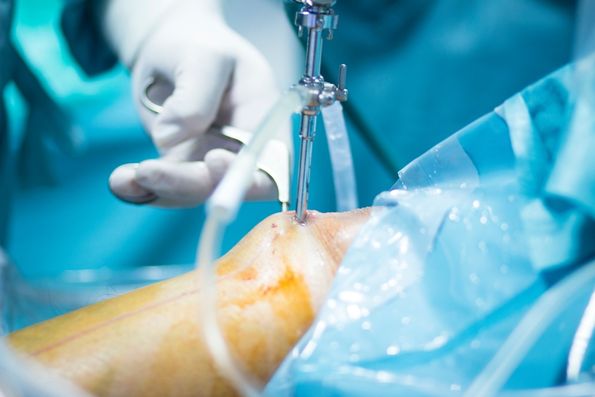
Arthroscopic Surgery is a way of looking inside a joint and fixing it through a couple of tiny cuts, instead of opening it up fully. A thin camera goes in through one small hole, and fine instruments go in through another. The surgeon watches on a screen and works from there.
It’s used a lot for knees and shoulders, and sometimes for the hip, ankle, elbow, or wrist. Torn cartilage, a torn ligament, loose bits floating inside the joint, inflamed lining – these can often be handled this way.
Because the cuts are small, there’s usually less pain afterward, smaller scars, and many people go home the same day or the next. That doesn’t mean it’s minor, though. It’s still surgery.
What Can Physiotherapy Do?
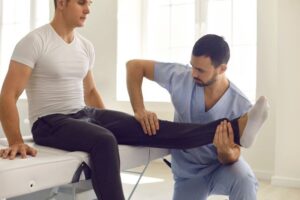
Quite a lot, actually. Physio works on the muscles, tendons, and movement around the joint rather than inside it. A weak thigh muscle puts extra load on the knee. Stiff shoulder muscles change the way the joint moves. Fix those, and the pain often settles on its own.
A good physio plan usually mixes stretching, strengthening, balance work, and some hands-on treatment. It takes time. Weeks, sometimes a few months. And it only works if the exercises get done at home too, not just in the clinic.
Who tends to do well with physio alone?
People with mild ligament sprains. Early wear and tear in the knee. Tendinitis and overuse pain, like a runner’s knee or a tennis elbow. Frozen shoulder in its early stages. Small cartilage tears that aren’t causing locking. In all of these, physio is normally the first thing we try.
Signs Physiotherapy Might Not Be Enough
Some problems are mechanical. Something inside the joint is torn or loose, and no amount of strengthening will put it back in place. That’s when Arthroscopic Surgery starts to make more sense.
Watch for these:
- The knee locks and you have to wiggle it to free it up
- A joint that keeps giving way, especially when you turn or twist
- Pain and swelling that haven’t really changed after a few months of proper physio
- A complete ligament tear, particularly in someone young and active
- Shoulder dislocations that keep happening again
- Loose pieces of bone or cartilage seen on the MRI
One of these alone doesn’t automatically mean an operation. But two or three together, plus physio that’s going nowhere, is usually a sign to talk about it seriously.
How the Decision Usually Gets Made
There isn’t a single test that answers it. Dr. Abhishek Gupta looks at a few things together before suggesting either route.
Your symptoms and how long they’ve lasted
Pain for two weeks is a different story from pain for eight months. So is a joint that only hurts after football versus one that wakes you at night.
The examination
Moving and pressing the joint in specific ways tells a lot. Whether a ligament feels loose, whether the cartilage catches, where exactly it hurts.
Scans
An X-ray shows the bones. An MRI shows ligaments, cartilage and soft tissue. Sometimes the MRI shows a tear that isn’t even causing trouble, which is why the scan alone never decides it.
Your life and your goals
A 22-year-old kabaddi player and a 60-year-old who walks in the park each morning might have the same tear on paper. The right plan for them could be quite different. What you want to get back to matters.
When Surgery Is First
In a few circumstances, waiting with the therapy can make matters worse.” A torn meniscus that continues to lock might damage the surrounding cartilage over time. A poorly unstable knee can cause further damage every time it slips, In some cases, Arthroscopic Surgery may be advised sooner rather than later.
And even then, physio doesn’t disappear. It just moves after the operation.
Why It's Rarely "One or the Other"
This is the part people miss. Surgery and physio aren’t really competitors. Most people who have a keyhole procedure will do physiotherapy before it, to get the joint as strong as possible, and after it, to get movement and strength back.
Skipping physio after surgery is one of the most common reasons results disappoint. The repair might be perfect, but if the muscles around it stay weak, the joint won’t feel right. So the real question is usually not physio or surgery. It’s whether physio alone is enough, or whether you need both.
What recovery looks like along each path
“With physio alone most people notice some change within a few weeks. But it can take two to three months to get the full benefit.” Slowly, and then all at once.
After keyhole surgery its about the first week or 2 managing swelling and getting the joint moving softly. Sometimes for a while, crutches. A few minor repairs and you’ll be back to your regular routine in a few weeks. Ligament reconstructions are more lengthy – many months to get back to sport. “Your recovery is very dependent on what they did in the joint.
A few things help on either path. Eat well, with enough protein. Sleep properly. Don’t skip sessions just because it feels better. And go back to sport or heavy work in stages, not all at once.
Questions Worth Asking Your Doctor
Before deciding, it’s fair to ask:
- What exactly is wrong inside the joint?
- What happens if I wait and try physio for another few weeks
- How long would recovery take with surgery, realistically?
- will I still need physio afterwards (the answer is almost always yes)
- What can I go back to doing, and when?
A good orthopaedic doctor won’t mind any of these. If you’re in or around Agra and want a clear opinion from an experienced arthroscopic surgeon, Dr. Abhishek Gupta is happy to go through your reports and talk it over. No rush to operate. Just an honest look at what your joint needs.