A fall in the bathroom, a missed step on the stairs, sometimes nothing more than sitting down too hard on a wooden chair. For adults past sixty-five, that is often all it takes. A pelvis bone fracture at this age rarely comes from a road accident; the bone has already thinned out, and it gives way under loads that a younger skeleton would shrug off without complaint.
What Is A Pelvis Bone Fracture In Older Adults?
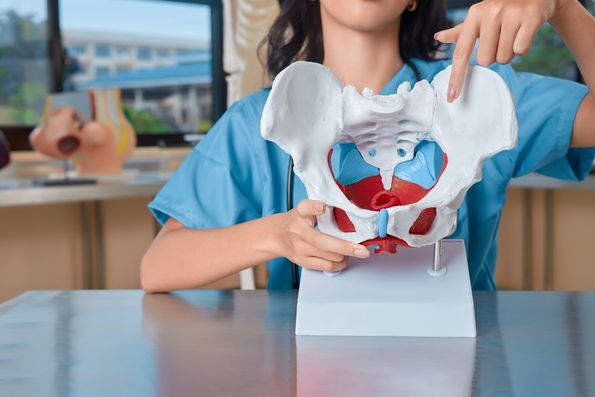
The pelvic girdle is a bony ring through which the weight of the whole body from above passes to the legs below. A crack in the pelvic ring is what we refer to today as a fragility fracture. Women lose bone density after menopause, but continue losing it throughout their lives as men do, although somewhat later in life. With poor eyesight, slippery floors, or medications for high blood pressure that cause a dizzy spell when standing, the chances of falling increase significantly.
These injuries are usually stable, which is good news of a sort. It also means the correct broken pelvis treatment looks nothing like what a twenty-five-year-old accident victim would be given.
Signs that Should Not Be Ignored
- Groin or hip pain that worsens the moment weight goes onto the leg
- Not being able to stand after a fall, even when nothing looks bent or twisted
- Swelling or bruising over the hip, buttock or the lower back
- Pain travelling down towards the thigh but stopping short of the knee
- Sometimes the only complaint is “I have not been walking properly since last week”. No dramatic pain at all
Many older patients move about for days with a hairline pelvis bone fracture before anybody suspects one. If pain after a fall has not settled in two or three days, an X-ray is worth doing.
Diagnosis procedure
Most cases of displaced fractures would be identified using a normal X-ray. Small cracks in the sacrum are known to be very difficult to diagnose on a normal X-ray; hence, a CT scan or MRI would be required for a diagnosis. Out of the two options, MRI is more likely to identify any problem.
Blood tests, vitamin D levels, and a bone density scan usually follow. There is little sense in fixing one broken bone while leaving the osteoporosis behind it untouched.
Broken Pelvis Treatment Without Surgery
Most stable fractures in older adults are handled conservatively. That does not mean weeks flat on a bed. Long spells of lying down bring on chest infections, pressure sores, clots and muscle wasting, and those complications take more elderly lives than the fracture ever does.
A conservative broken pelvis treatment plan will normally include:
- pain control, usually paracetamol along with a short course of something stronger
- getting the patient sitting up and then standing with a walker, within the first day or two
- blood thinners to keep clots out of the legs
- calcium, vitamin D and a bone-strengthening drug such as a bisphosphonate or denosumab
- Physiotherapy begun early and carried on at home afterwards
Weight bearing is generally permitted as far as pain allows. Six to twelve weeks is the usual healing window, though a frail patient may take longer.
When Surgery To Repair The Pelvis Is Required
A surgeon comes into play when the fracture is unstable, when the bone fragments have moved out of place, or when the pain does not subside even after two to three weeks of conservative treatment. The surgical pelvis repair in elderly patients is done in a minimally invasive way. Major surgeries are avoided as much as possible.
The options a surgeon will consider:
- Percutaneous screw fixation, where screws pass through tiny skin punctures into the sacrum or the pubic bone under X-ray guidance
- Sacroplasty. Bone cement is injected into a cracked sacrum and the pain often disappears within a day
- INFIX, an internal fixator that sits under the skin across the front of the pelvic ring
- Plate and screw fixation through an open cut, kept aside for badly displaced cases
- Hip replacement, if the socket has broken along with the ring
Recovery after a percutaneous pelvis repair tends to be quick. Patients are frequently standing the very next day, which is exactly the point of choosing the smaller operation.
A word on timing
Delay is the enemy here. An elderly patient who spends a week deciding whether to go ahead loses muscle that will not come back easily. If pelvis repair is going to happen at all, sooner beats later.
Recovery Tips After a Pelvis Bone Fracture
Recovery is not only about the bone knitting. It is about returning an older person to the life they were living before the fall, and that takes months rather than weeks.
Move around, but within certain boundaries. Many short walks prove far more effective than one long walk. Sticks and walkers should be viewed as aids rather than failures because they help prevent subsequent falls.
Nourish the bone. Have protein with every meal – milk and curd, eggs, dal, and vitamin D as prescribed. The appetite of the elderly becomes suppressed following any injury, making smaller quantities more effective.
Be honest about pain. Under-treated pain keeps people in bed, and bed is where the real trouble starts. Tell the doctor if the tablets are not working.
Fix the house before discharge. Get bars for support in the washroom; your toilet seat should be raised, no loose rugs, a night light on the way to the toilet. Most repeat falls happen at home, at night.
Do not skip the follow-up X-ray. Healing is checked at roughly six weeks and again at three months.
Families who want a proper assessment rather than waiting for things to settle by themselves can look into pelvis bone fracture treatment in Agra and get the imaging done early.
How To Stop The Next One
As many as one out of five elderly patients suffering a hip or pelvic fracture goes on to have another fracture within two years. Taking osteoporosis drugs, undergoing an eye examination, reviewing the use of any sedating medications, and attending balance training classes can greatly reduce the risk. Dr. Abhishek Gupta, orthopedic doctor in Agra can help assess bone health, fracture risks, and recovery needs. Any broken pelvic management that ends with just a fracture and overlooks bone quality is incomplete.