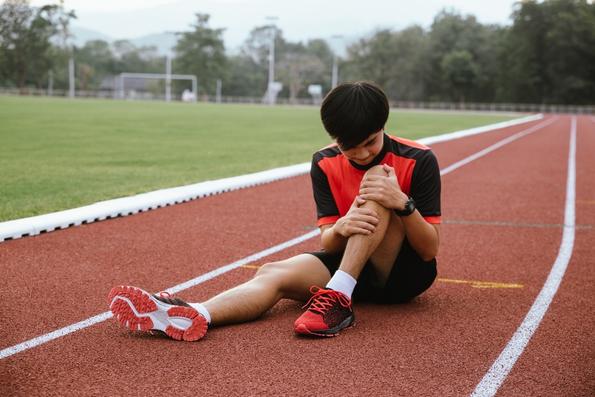
Kids who play cricket, football or badminton every evening will get hurt now and then. Most sports injuries in young athletes are minor, though a few need proper attention because growing bones behave differently.
Parents and coaches often can’t tell which is which. A sprain that settles in a week looks a lot like a growth plate injury at first, and that’s where most of the confusion starts.
Why Are Sports Injuries in Young Athletes Different?
Children aren’t small adults, at least not where bones are concerned. Sports injuries in young athletes often involve the growth plates, soft areas of cartilage near the ends of long bones where growth actually happens. These zones are weaker than the ligaments around them, so a twist that would sprain an adult’s ankle might crack a child’s growth plate instead.
Growth spurts add to it. Bones get longer quickly, muscles and tendons lag behind and stay tight, and the joints take the pull. Then there’s training. Many kids now play one sport all year at an academy, with matches on weekends and hardly a break in between.
The Injuries Doctors See Most Often
Sprains and strains
Twisted ankles, pulled hamstrings, a jarred wrist. The most common by far, and usually they settle with rest.
Growth plate fractures
These need an X-ray and proper care. If one is missed or heals badly, the bone can grow unevenly, though that’s not common when it’s treated early.
Overuse problems
Pain builds slowly here instead of from one bad moment. Knee pain just below the kneecap in footballers, heel pain in young runners, lower back pain in fast bowlers who bowl long spells. The last one deserves attention because it can be a stress fracture in the spine.
Ligament tears in the knee
An ACL tear used to be rare in children. It isn’t so rare anymore, mainly in football, basketball and kabaddi where sudden turns and landings are part of the game.
Fractures from falls
Wrist and forearm breaks, mostly. Landing on an outstretched hand does it.
Head knocks
A concussion is a brain injury, even a mild one. A child who seems dazed, sick or forgetful after a knock should be off the field that day. No arguments.
How a Sport Injury Is Usually Managed
Most of the time, a fresh sport injury is handled with simple steps for the first two or three days: rest, ice wrapped in a cloth, a light compression bandage and keeping the limb raised. Pain relief as the doctor advises.
After that it depends on what’s wrong. A splint, cast or brace might be needed for some injuries. Physiotherapy plays a big role, especially for overuse problems, where stretching, strength work and fixing technique often matter more than any medicine. Surgery is needed only now and then, mostly for certain ligament tears or a fracture that has shifted out of place.
Families who want an assessment can visit a sports injuries treatment clinic for expert guidance. Doctor will explain how such cases are looked at and followed up.
Going Back to Play, But Not Too Soon
This is where things go wrong quite often. The pain eases, the child feels fine, a tournament is coming up, and they’re back in the nets before the injury has properly healed. Going back too early tends to bring the same problem back, sometimes worse than the first time.
Return should be gradual. Light running first, then drills, then full practice, and a match only after that. With sports injuries in young athletes, the doctor or physio usually decides when each step is okay.
Can a Sport Injury Be Prevented?
Not every time. But the risk of a sport injury comes down a fair bit with a few habits:
- Warming up properly and stretching after, not skipping it because practice started late
- At least one or two rest days a week, and a proper break from the sport for a few weeks each year
- Shoes that fit and suit the sport
- Good technique, which a decent coach will keep correcting
- Plenty of water, particularly in the Agra summer when afternoons get brutal
Playing more than one sport helps too; the body doesn’t take the same stress day after day.
Signs That Shouldn’t Be Brushed Aside
Pain that keeps a child awake at night, a joint that swells up quickly, a limb they can’t put weight on, or a visible bend in the bone, these need a doctor. So does pain that comes back every time they play, even if it goes away with rest.