Not every broken pelvis looks the same on an X-ray. Some are a thin crack that heals with rest and a walker, while others involve the whole ring of bone and need surgery within days.
The type of break decides almost everything about treatment. So it helps to know what the doctor is actually looking at, and why two people with the same fall can end up on very different recovery paths.
What Usually Causes an Injury to Pelvis?
In younger people, an injury to pelvis generally comes from heavy force. A road accident on the highway, a fall from a roof or scaffolding, a hard sports collision. Those are the usual stories.
Older adults are a different case altogether. Bones thinned by osteoporosis can crack after a simple slip in the bathroom, sometimes without any clear fall at all. Moreover, teenage athletes, sprinters and footballers mostly, can pull out a pelvic bone fragment where a muscle attaches.
Main Types of Fractured Pelvis Injuries
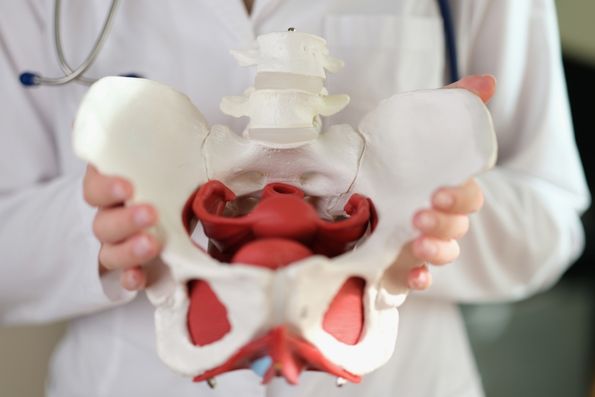
The pelvis is like a ring of bones placed on the base of the spine. It carries the weight of the upper body, connects to both hip joints, and protects the bladder, bowel and some large blood vessels inside it. Because it’s a ring, a break in one spot often comes with a second break, or a loosened joint, somewhere else.
Doctors sort a fractured pelvis in a few ways. The most useful split is stable versus unstable, and after that, by the direction the force came from.
Stable fractures
The bone breaks in one place and the ring stays in position. Pieces don’t move apart much. These are common after low-energy falls in older people and in most cases heal without an operation.
Unstable fractures
Two or more breaks in the ring, or a break plus a torn joint, and the pelvis can shift. This is the serious kind. There’s often heavy bleeding inside, and the bladder or nerves may be damaged, which is why it’s treated as an emergency.
Open book fractures
When force comes from the front, say a head-on crash, the front of the pelvis can spring open like a book. The joint at the front, called the pubic symphysis, gets pulled apart.
Lateral compression and vertical shear
A side impact squeezes the ring inward; this is lateral compression, and it’s quite common in road accidents. Vertical shear is when one half of the pelvis gets pushed up or down compared to the other, usually after landing on one leg from a height.
Avulsion fractures
A strong muscle pulls a small chunk of bone off. Seen mostly in young athletes. Painful, yes, but generally not dangerous.
Acetabular fractures
Your hip joint socket is called acetabulum. A break here affects how the hip moves, and if the joint surface heals unevenly, arthritis can show up later in life.
Insufficiency and stress fractures
Fractures caused by gradual stress, as seen in athletes training for long distances or in young soldiers, or by brittle bone in patients who are older. Because they are not always detectable with a standard X-ray, an MRI is occasionally necessary.
How Is a Broken Pelvis Treated?
Treatment depends on the type of break, the person’s age and whatever other injuries came along with it. Roughly, it falls into three groups.
Non-surgical care works for most stable breaks and avulsion injuries. That means pain relief, rest, crutches or a walker, and slowly putting weight on the leg as the doctor allows. Blood thinners may be given to prevent clots while the patient isn’t moving much.
Emergency stabilisation comes first for an unstable broken pelvis. A pelvic binder, which is basically a tight belt wrapped around the hips, holds the bones together and helps slow internal bleeding. Some patients need an external fixator: metal pins in the bone joined by a frame outside the body.
When the patient is stable enough, surgery can proceed. Open reduction and internal fixation refer to the use of plates and screws to secure the pieces in place. Additionally, it is frequently necessary for acetabular fractures with a changed joint surface in order to restore smooth hip motion.
For anyone in and around the city, visiting a professional clinic for pelvis bone fracture treatment in Agra is a feasible option.
Recovery After a Fractured Pelvis
Healing takes time. A small stable crack might settle in a couple of months, while a complex fractured pelvis that needed surgery can take several months before normal walking comes back. Physiotherapy is a big part of it. Gentle movement starts early, then strength work for the hips and core.
Some people feel stiffness or a dull ache for a while even after the bone has joined. That’s fairly normal. It should keep getting better though.
When to See a Doctor
Any injury to pelvis after a fall or accident needs a proper check, even if walking still seems possible. Severe pain in the groin or hip, blood in the urine, swelling around the hips, numbness in the legs or feeling faint after an accident are all reasons to get to a hospital without delay.
If the pain started quietly and hasn’t eased after a week or two, speaking with an orthopedic doctor in Agra is a sensible next step.